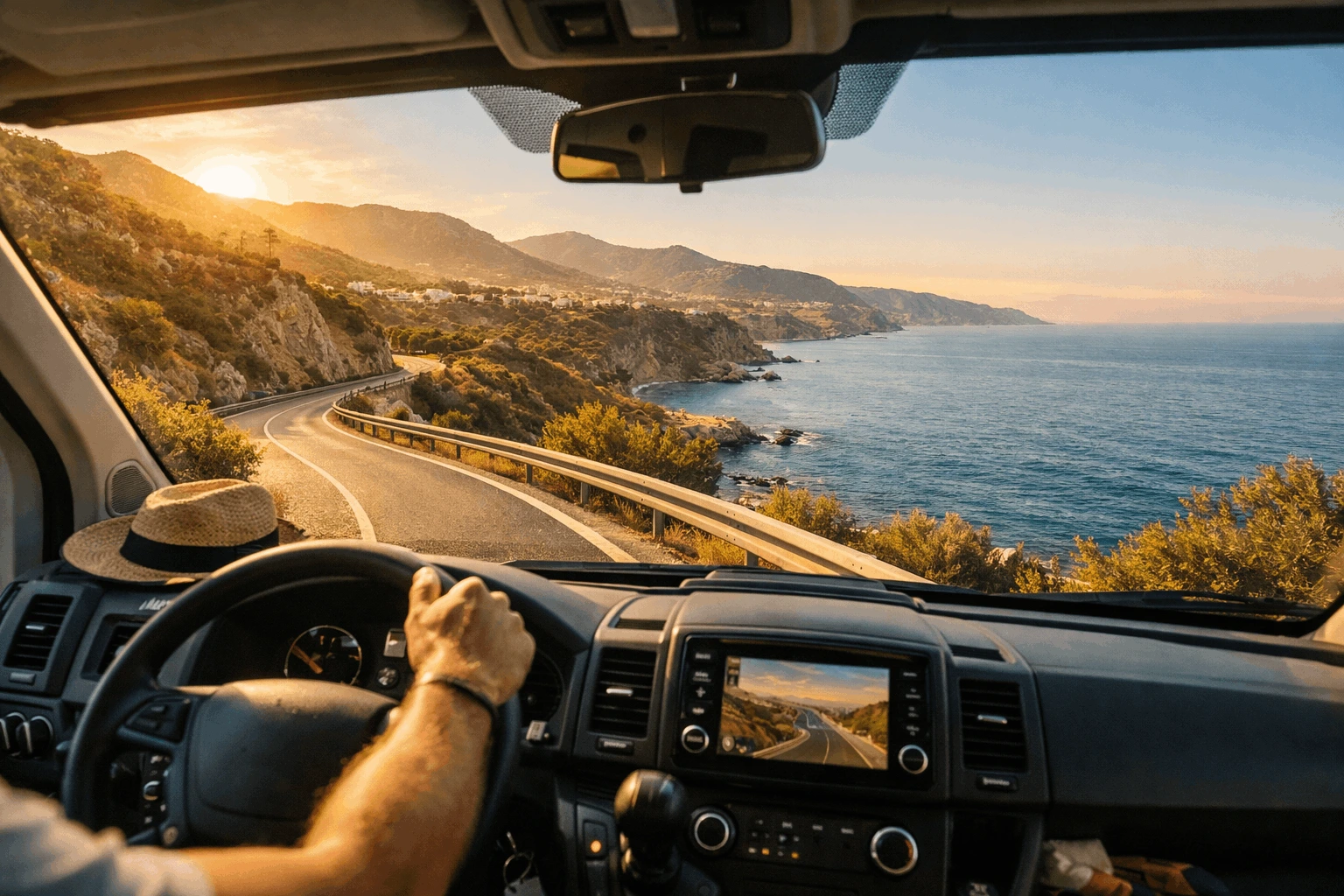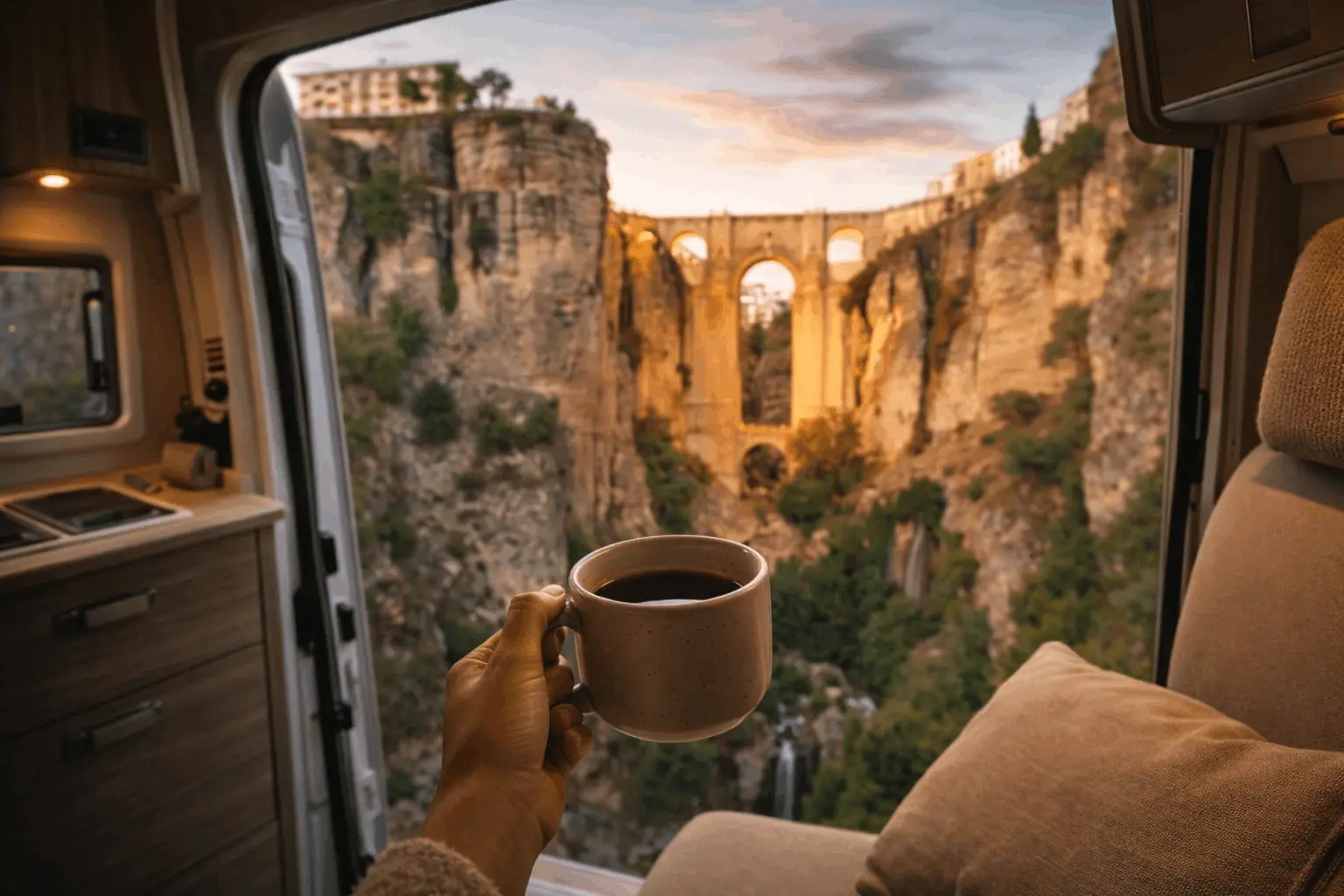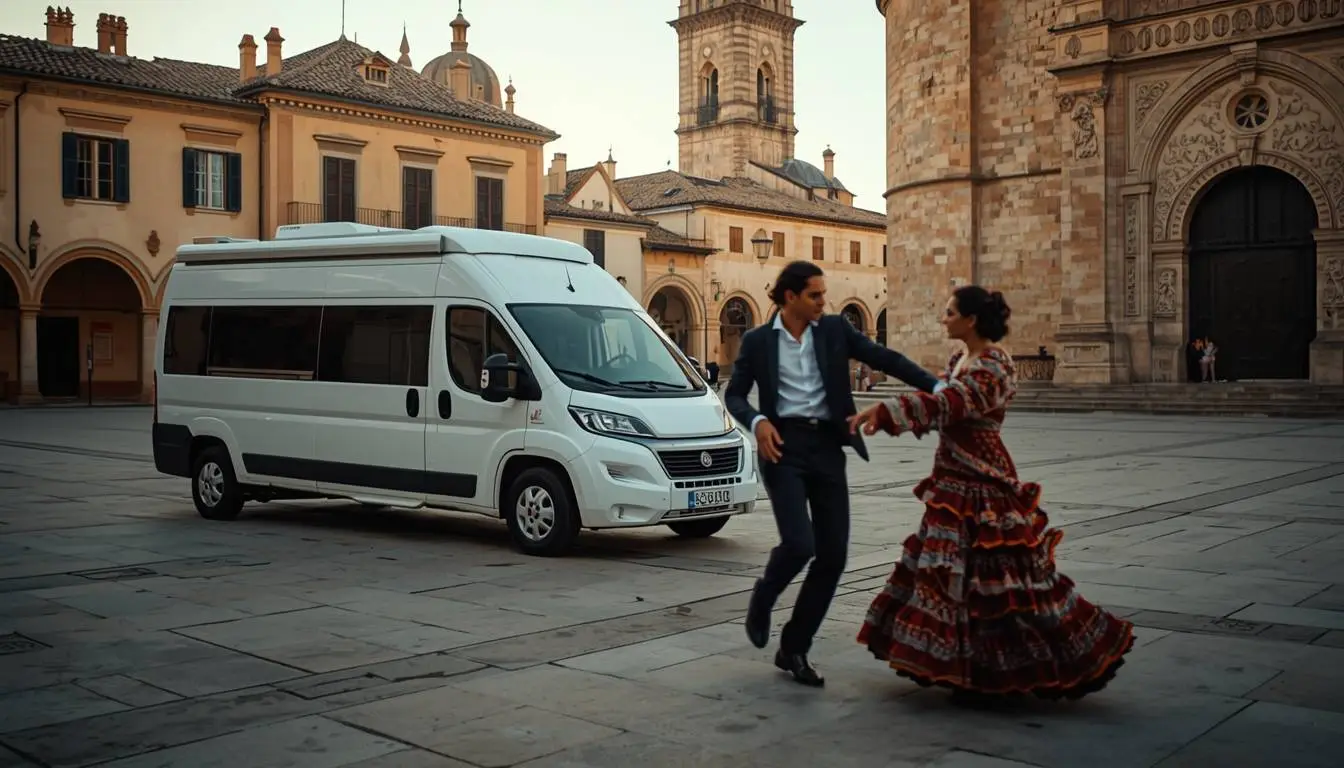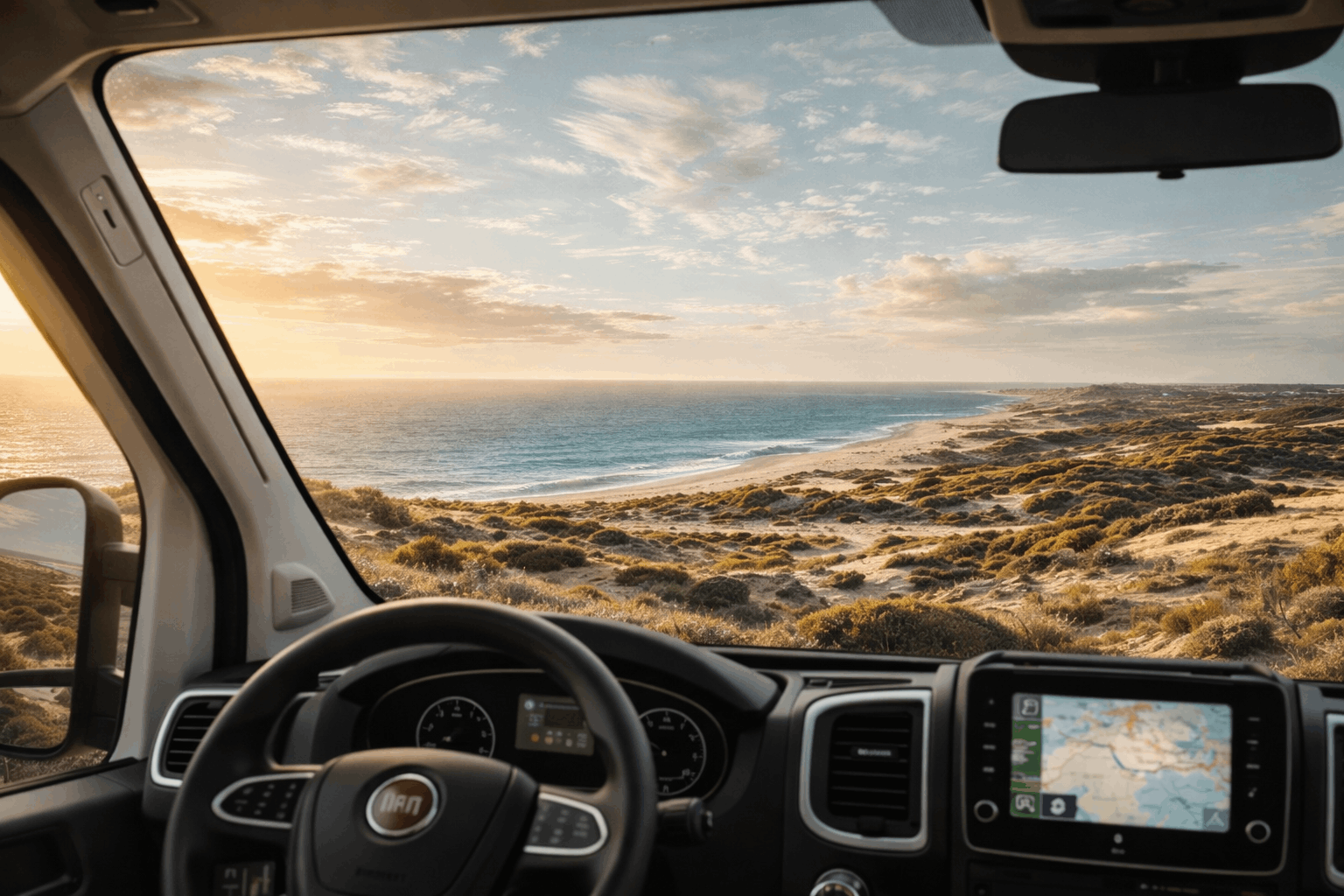
This route is not about rushing or “seeing everything”. It’s about wind on your face, salt on your skin, and days shaped by light. The Costa de la Luz is pure Atlantic: more open, wilder, and far less domesticated.
Here, the camper is more than transport. It’s your home, your viewpoint, your shelter from the wind, and often the best beach bar around. Coffee with an ocean view, a surfboard drying in the sun, and the clear feeling that no one is hurrying you along.
Ideal duration
6 to 8 days
Six to understand the rhythm. Eight to let your body fully adapt to the Atlantic pace.
Perfect for
Bohemian travellers, surfers, open landscapes and mental calm
Ideal if you’re looking for wide beaches, less noise and longer days.
Best time to go
Spring, summer and early autumn
Reliable wind, beautiful light and comfortable temperatures even in midsummer.
Why the Costa de la Luz gets under your skin (and doesn’t let go)
The Atlantic changes your rhythm. The beaches are bigger, the wind clears your head, and the landscape doesn’t close in on you — it opens up. There’s no feeling of overcrowding here. Just space.
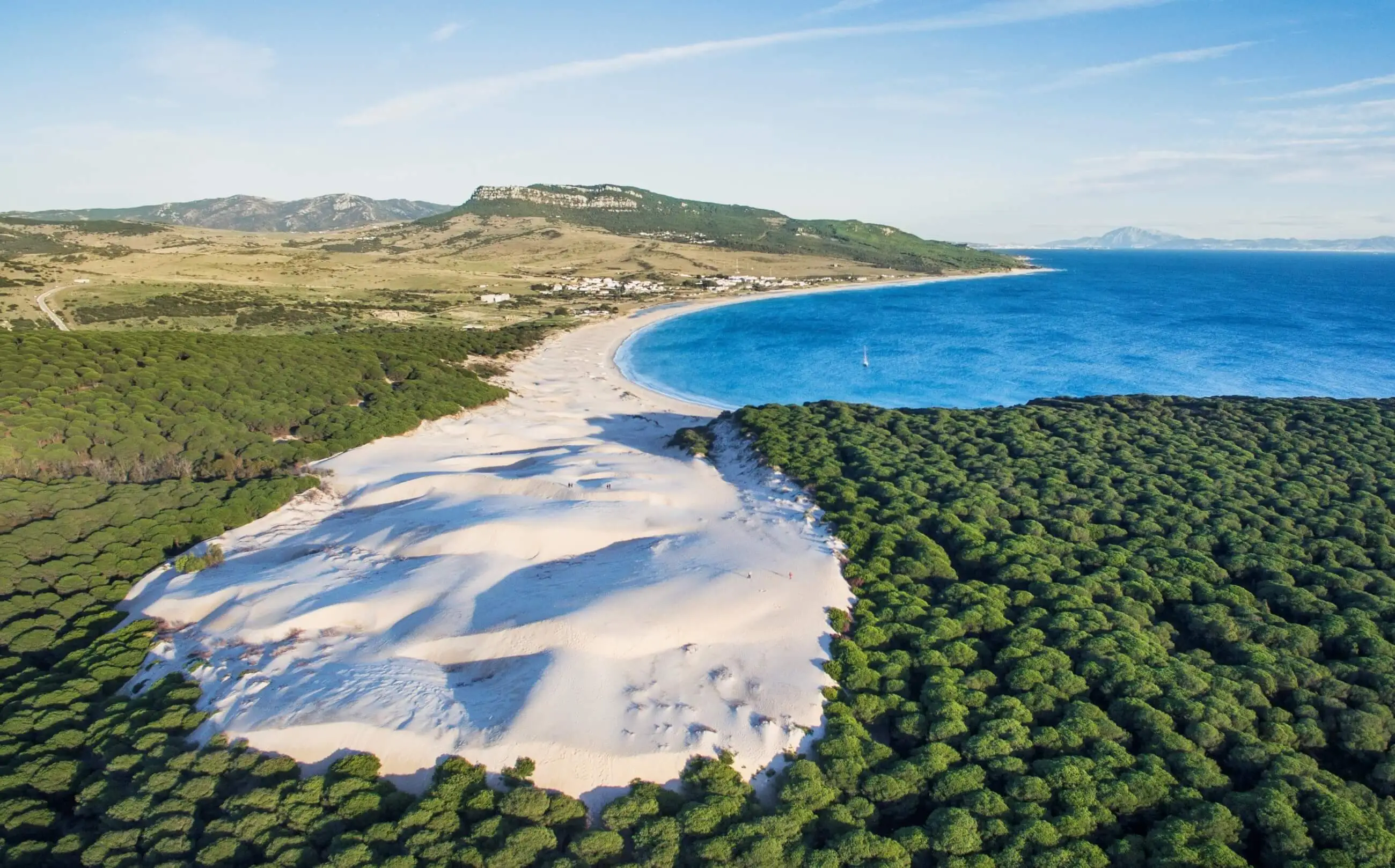
Cádiz teaches you to slow down. Tarifa shakes you awake with wind and energy. Bolonia reminds you that history can also be barefoot. Vejer provides the counterpoint: silence, elevation and carefully placed beauty.
In a camper, everything clicks. You move with the light, choose your beach according to the wind, and decide when the day ends. This isn’t about ticking places off a list: it’s about feeling light.
The core idea:
Fewer plans, more horizon. More wind, less noise.
Costa de la Luz Route itinerary (6–8 days) — day by day
Day 1 — Málaga → Cádiz
Goal: change seas (and pace) — arrive with daylight and ease into the journey
You leave Málaga with the Mediterranean still on your skin, but today is a shift in mental climate. As you approach Cádiz, the landscape opens up and the air turns distinctly Atlantic: more salt, more breeze, more space. It’s the perfect first day to understand the spirit of this route: you’re not here to rush — you’re here to breathe.
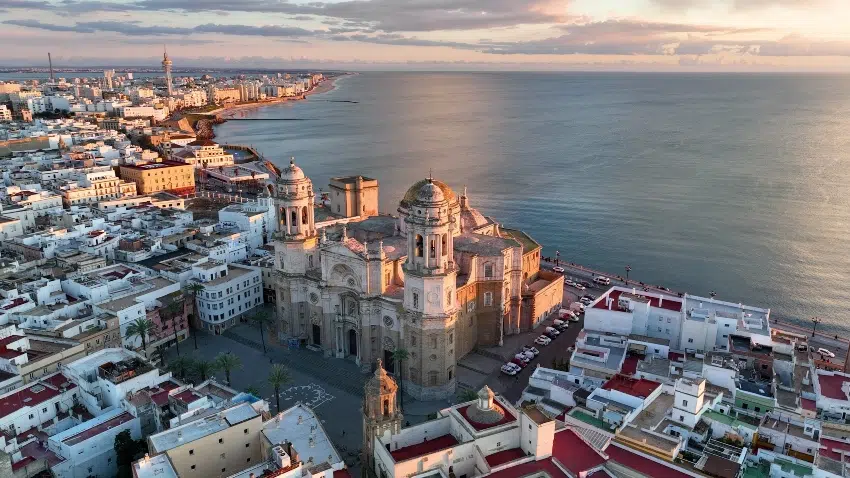
Cádiz welcomes you as a city made for walking. There’s no need for an aggressive plan — what you need is a beautiful route. Start in the old town and let it guide you: lively squares, shaded alleys, the murmur of the sea behind the façades, and that golden light that seems deliberately timed for late afternoon. Today, luxury is simple: arrive, park sensibly, walk for a couple of hours… and sit down to watch.
Don’t miss today
- An unhurried walk through the historic centre: admire the cathedral from outside, wander the squares and alleys to “take the city’s pulse”.
- If you fancy a quick but memorable viewpoint: Torre Tavira (Camera Obscura) for a rooftop perspective of Cádiz.
- Sunset, Cádiz-style: Campo del Sur with the cathedral as a backdrop, or a walk towards La Caleta for a more cinematic finale.
Sunday Campers tip (day one = smart landing)
Don’t take the camper into the very heart of the old town. It’s best to park outside / in a comfortable area and walk in. Cádiz is best enjoyed on foot: fewer manoeuvres, more magic. And if it’s windy, keep a light layer handy — the Atlantic cools things down just as the sun drops.
Suggested mini-plan (no stress)
Arrive with daylight → short walk through the old town → viewpoint (Torre Tavira if it fits) → seafront stroll at sunset (Campo del Sur or La Caleta) → relaxed dinner. Do this, and you’re already moving at Atlantic speed.
Day 2 — Cádiz → Tarifa
Goal: feel the Atlantic in your body and slip into Tarifa mode
Today the journey stops being purely visual and becomes physical. The wind arrives with intent, the light grows sharper and cleaner, and the landscape begins to feel truly open. The road to Tarifa isn’t just a transfer — it’s a transition. You move from historic city to frontier territory, where sea, wind and horizon are in charge.
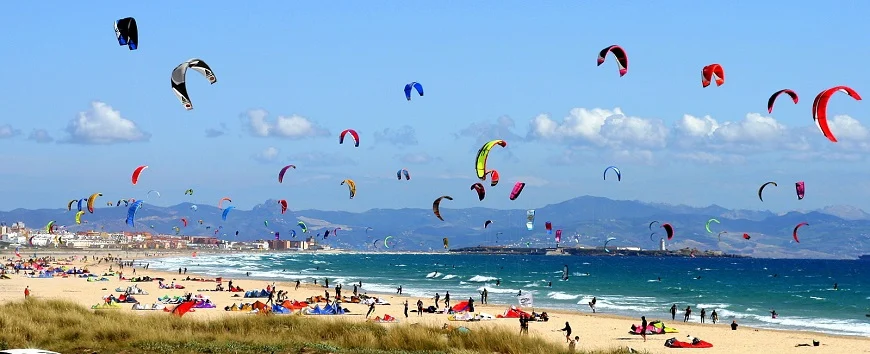
Tarifa is energy in motion. Kites in the sky, boards leaning against walls, campers, vans and backpacks coexisting without hierarchy. There’s no single “right plan” here. The plan depends on the wind: if it’s strong, you seek shelter; if it softens, you simply watch the sea. Tarifa doesn’t like being forced. You listen to it and go along.
Don’t miss today
- Arrive in Tarifa with daylight and walk without a plan through the old town. It’s compact, lively and perfect for “reading” the day.
- Step out to the sea wherever the wind feels right: promenade, viewpoint or nearby beach depending on the moment.
- Look up at the sky: understanding the wind is part of the experience here, even if you don’t kitesurf.
Sunday Campers tip (real Tarifa, not the postcard)
With strong Levante, look for more sheltered spots and accept that the wind is in charge. With Poniente, the mood softens and walking becomes a pleasure. Always handy: windbreaker, sunglasses and a cap.
Suggested mini-plan (no forcing it)
Arrive → short walk through the old town → check the wind → choose beach or sheltered walk → simple dinner. Today isn’t about “doing a lot”: it’s about understanding Tarifa and its rhythm.
Day 3 — Tarifa → Bolonia
Goal: slow things down and let the landscape do the work
The drive from Tarifa to Bolonia is short, but the shift is profound. You leave behind the constant energy of the wind and enter a place where everything feels slower, wider and more essential. Bolonia doesn’t try to impress you — it simply exists.
Time flattens out here. The beach is open and untamed, the dune dominates the landscape, and Roman ruins appear without drama, as if they had always been waiting by the sea. It’s one of those places where plans dissolve and the day organises itself: walk, climb, wander, sit… repeat.
Don’t miss today
- Climb the Bolonia dune at an easy pace: at the top there’s no rush — just wind and horizon.
- Walk barefoot along the shoreline: this is a beach for walking, not for “claiming a spot”.
- Visit Baelo Claudia without watching the clock: Roman history with the sea as a real backdrop, not a stage set.
Sunday Campers tip (Bolonia, done properly)
Arrive fairly early or later in the afternoon to avoid the busiest hours. Respect the dune (stay on marked paths) and accept one simple truth: you’re not here to “do lots of things” — you’re here to be.
Suggested mini-plan (Bolonia mode)
Arrive → long walk along the beach → relaxed climb up the dune → rest in the shade → visit Baelo Claudia → sit and watch the ocean at sunset. If you lose track of time, you’re doing it right.
Day 4 — Bolonia → Vejer de la Frontera
Goal: move from open horizons to quiet height
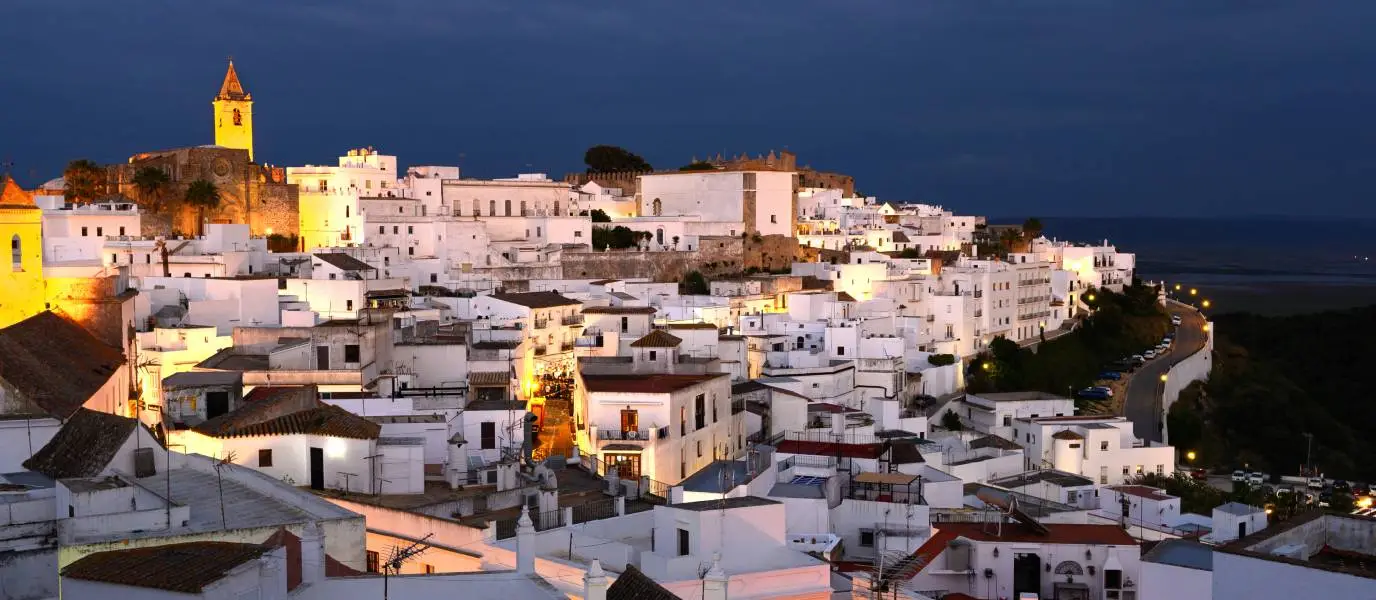
You feel the change from the road. The open sea, constant wind and endless horizon are left behind, and the land begins to rise. Vejer appears suddenly — white, compact, placed with almost excessive precision on its hilltop. It’s the perfect contrast after Bolonia: less stimulation, more inward calm.
Vejer isn’t something you “cover” — you walk it slowly. Narrow streets, white walls, deep shade and viewpoints that suddenly open out towards countryside and the distant Atlantic. Without noticing, your pulse slows. The plan simplifies itself: a long walk, unplanned pauses, and a quiet dinner as the light fades.
Don’t miss today
- Wander the old town without a map: Vejer makes the most sense when you let it guide you.
- Step out onto one or two viewpoints in the late afternoon, when the light softens.
- A relaxed, unhurried dinner: tonight, the luxury is ending the day in calm.
Sunday Campers tip (how to enjoy Vejer)
Park outside the historic centre and walk in. Vejer is far better when you’re not thinking about the vehicle. It cools down towards evening — a light layer makes all the difference and lets the walk stretch on without checking the time.
Suggested mini-plan (Vejer mode)
Arrive → long walk through the old town → viewpoints at sunset → relaxed dinner → another short walk once the village quietens down. If the day ends in silence, it worked.
Days 5–8 — Repeat, choose, and stay where you felt best
Extra days aren’t for adding places, they’re for returning. To the beach that caught you, the sunset that put things back in order, or simply for staying still.
You really understand the Costa de la Luz when you stop moving forward and start staying.
On open routes like this, your camper makes all the difference
Wind, salt, light and space. To really enjoy the Costa de la Luz, you need a camper that works as shelter, home and viewpoint — all at once.
Space, autonomy and comfort for travelling at Atlantic pace.