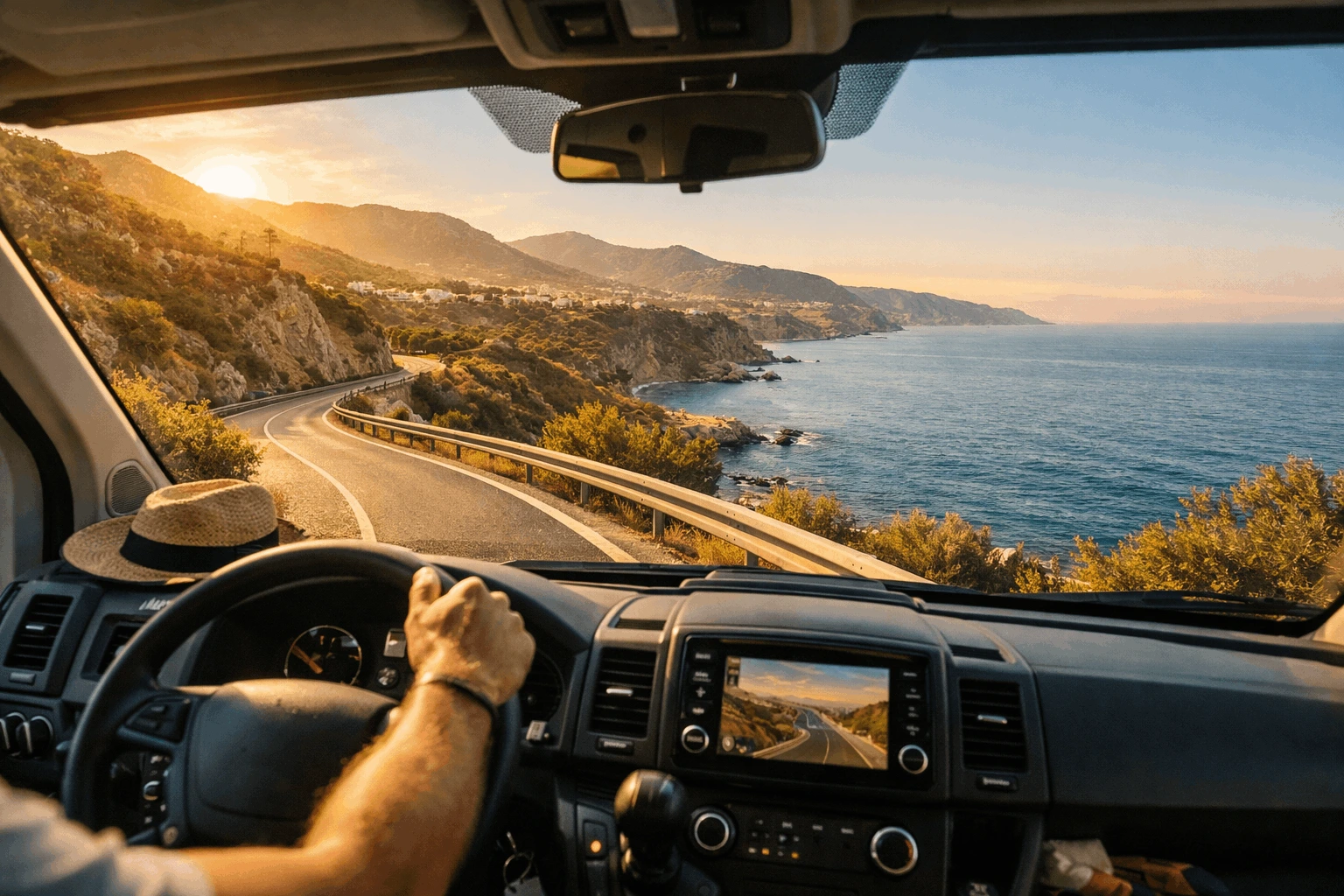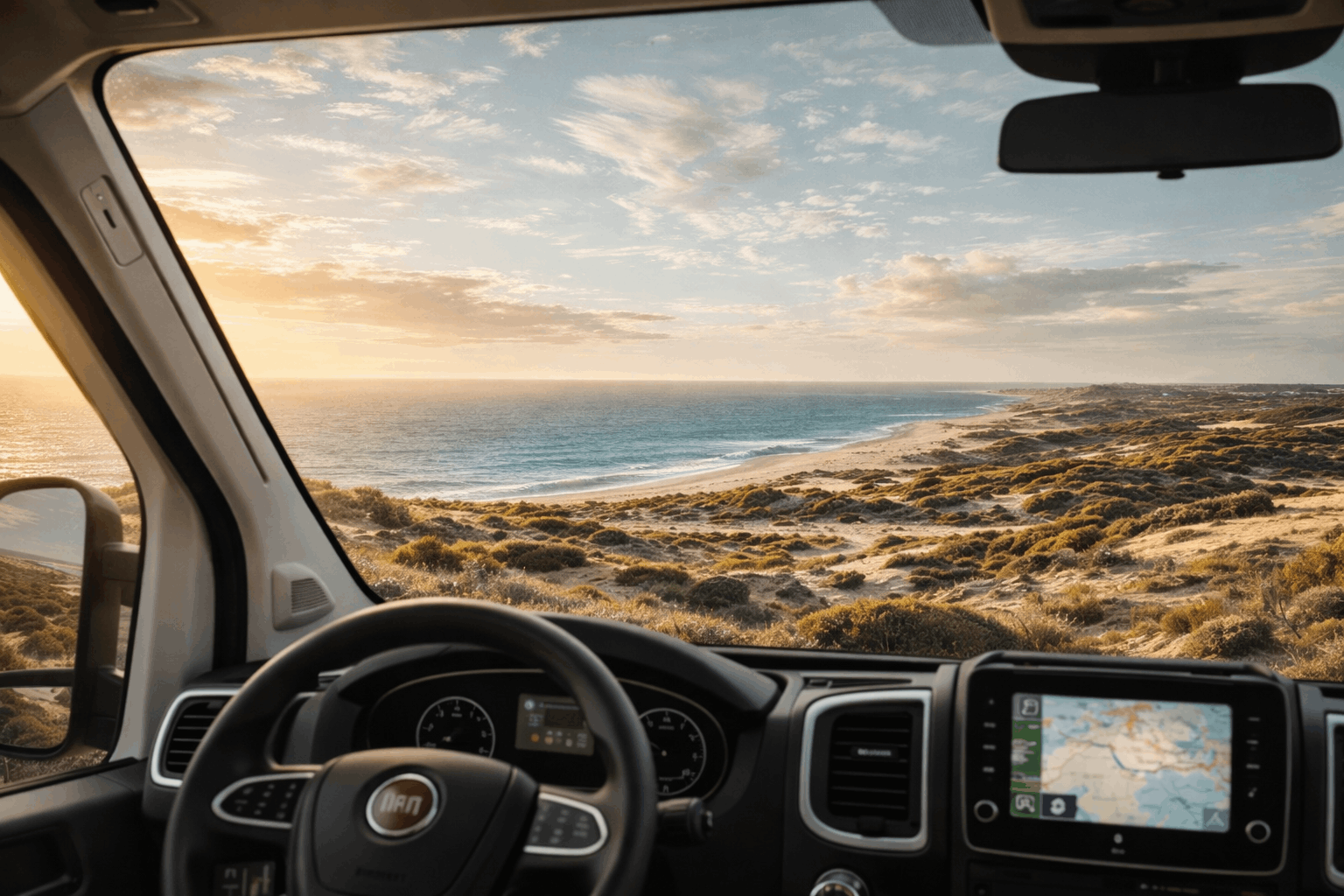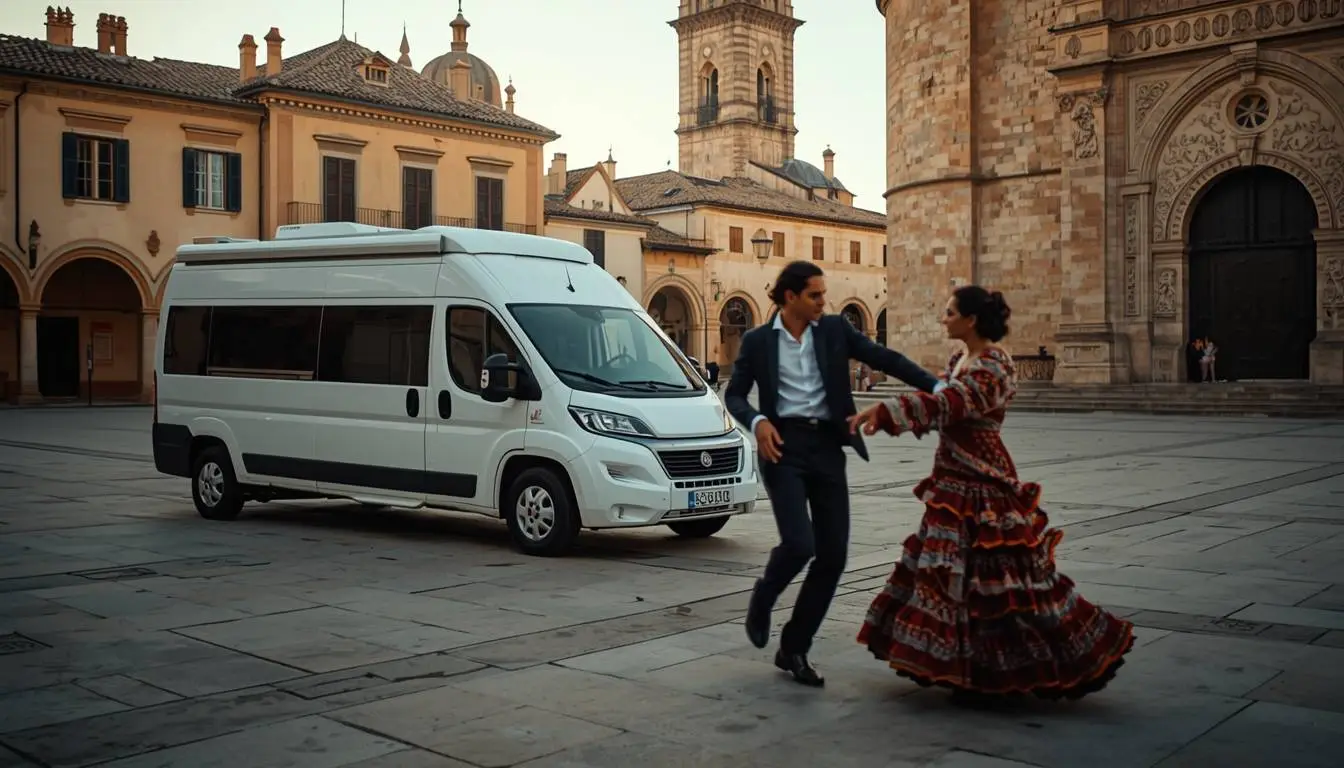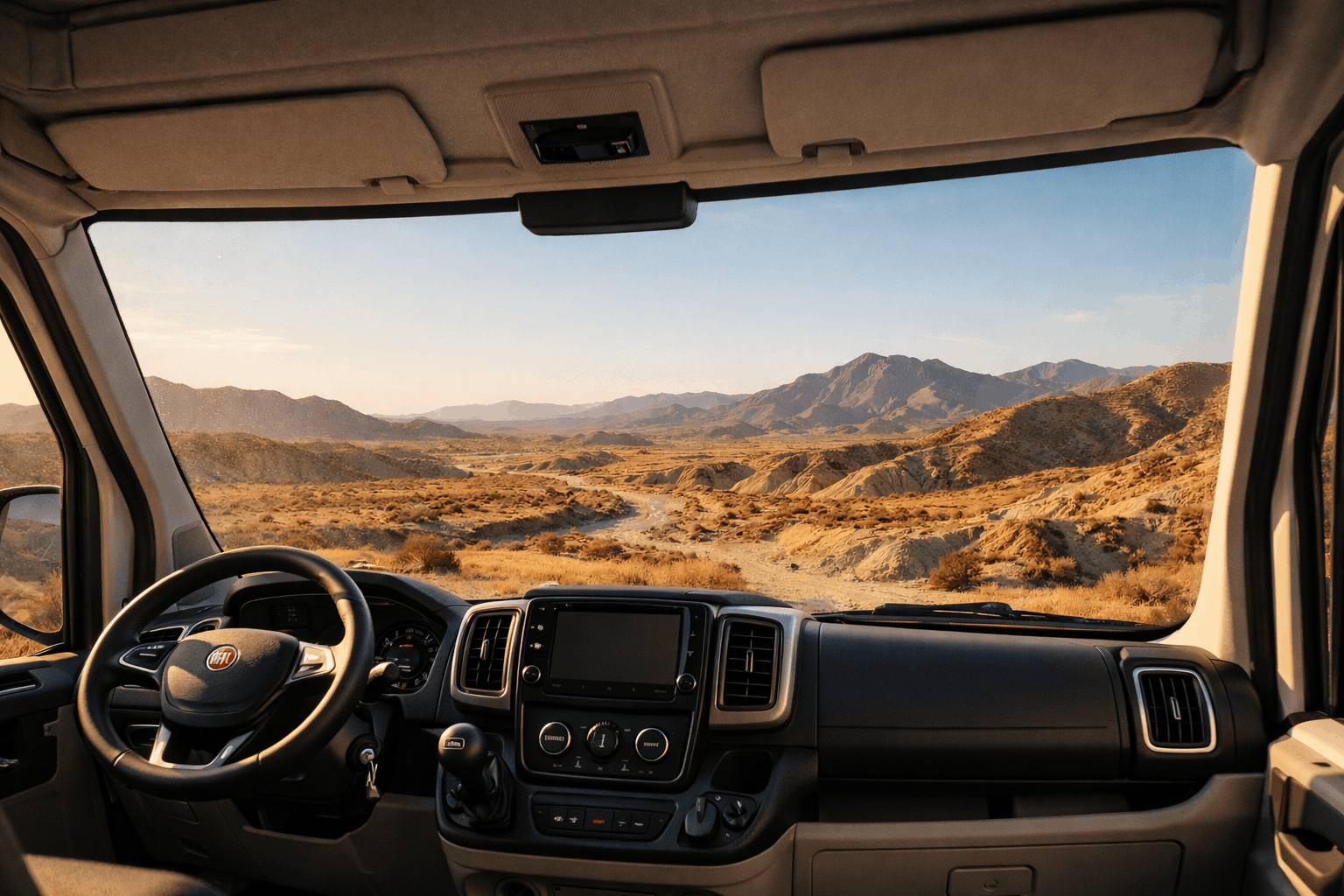
This is not green Andalucía, nor the postcard version of picture-perfect villages. This is Andalucía dry, open and brutally honest. A route where the landscape doesn’t decorate: it commands.
You’ll go from sleeping underground in Guadix to crossing the only desert in Europe, finishing in front of the wildest Mediterranean coastline. A route to switch off from everything and reconnect with something simpler.
Ideal duration
5 to 7 days
Five to cover it. Seven to let the desert do its work.
Perfect for
Explorers, photographers and curious travellers
Unique landscapes, silence and a proper sense of space.
Best time of year
Spring and autumn
Spectacular light and kinder temperatures.
Why this route feels different to all the others
There’s no overload of stimulation here. No villages every ten minutes, no soulless signposted viewpoints. There is space. And when there is space, things happen.
The Tabernas Desert forces you to turn the volume down. Guadix shows you another way of living. Cabo de Gata reminds you the Mediterranean can still be wild.
In a camper, everything clicks. You don’t depend on timetables, you don’t need to reach any particular place. You stop when the landscape asks you to and you end the day when the light goes out.
The central idea:
This route isn’t about filling your day. It’s about clearing your head.
Desert & Almería Route Itinerary (5–7 days) — day by day
Day 1 — Málaga → Guadix
Goal: leave the noise behind, step into silence, and shift from “coast mode” to “interior mode”
You leave Málaga and, without noticing, the landscape starts to strip back. Less green, more ochre. Less humidity, more hard light. The road becomes a slow transition: from the familiar to the strange. And when Guadix arrives, it doesn’t ask permission.
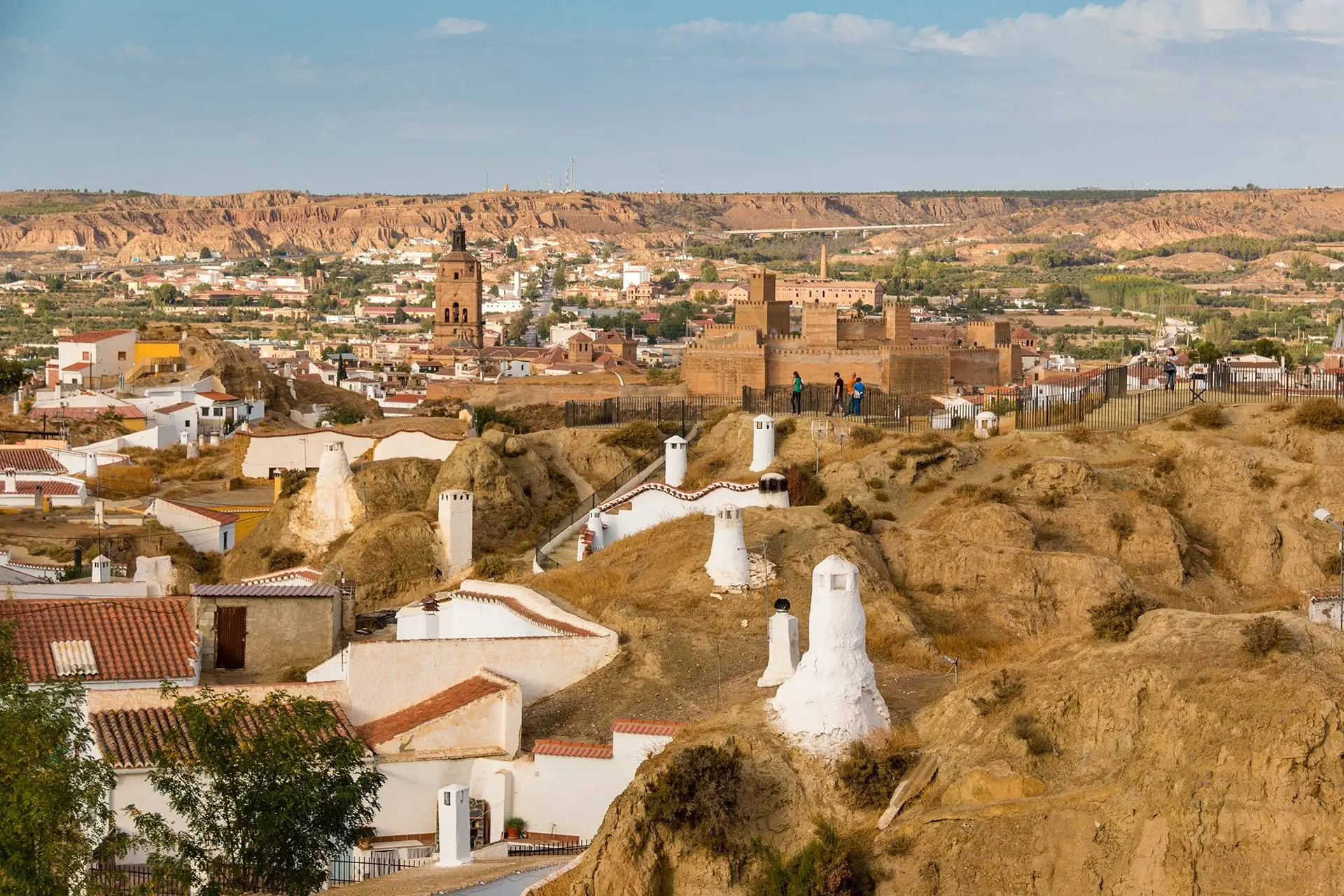
Because Guadix isn’t just a town. It’s an idea: living underground. White chimneys rising out of the earth, discreet doorways, and the feeling that the world above is optional. Today you’re not here to “do a thousand things”. You’re here to understand a place.
Essential today
- See a cave-house area (and look at the chimneys: it’s not decoration).
- Wander the historic centre without a map and let the pace drop on its own.
- End the day with a big, open sunset: here, the sky is in charge.
Sunday Campers tip (no pretending)
Arrive with daylight to spare. Inland, night falls “more seriously” than on the coast, and finding a calm place to stop the camper without rushing completely changes the tone of the trip. Today the plan is simple: easy dinner, proper sleep.
Day 2 — Guadix → Tabernas Desert
Goal: accept the vastness and let the landscape set the pace
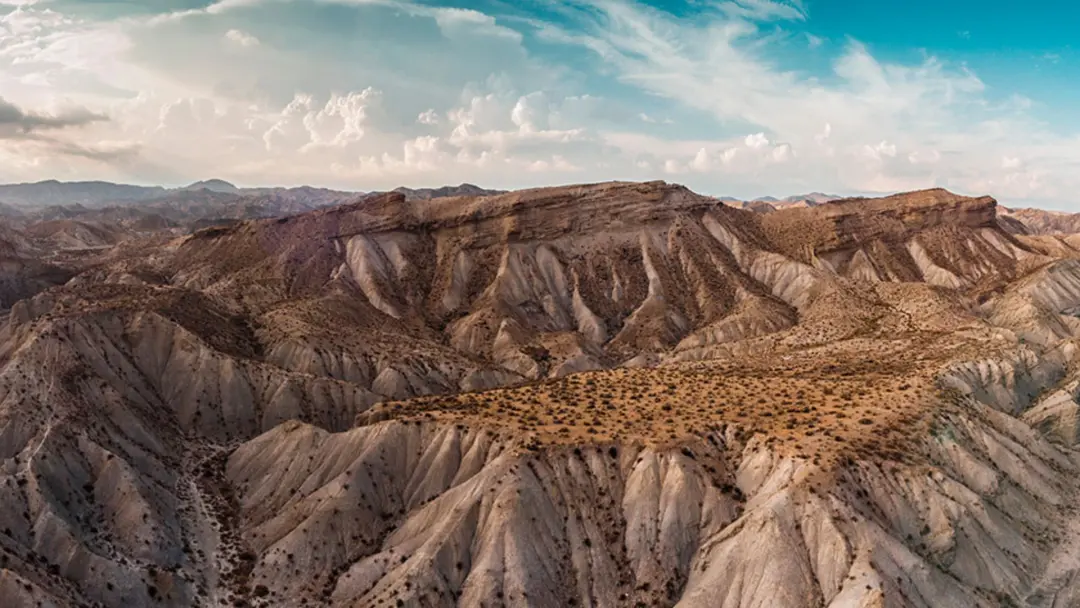
On day two, the trip changes scale. You leave Guadix and the terrain starts to open up for real. The horizon pulls away, the towns thin out, and the road becomes a line drawn across bare earth.
You’ll see dry riverbeds, ochre tones, eroded hills, and that odd feeling of crossing a film set. That’s no accident. Westerns, epics and frontier films were shot here because this landscape already tells a story all by itself.
Essential today
- Drive slowly and stop even when there’s “nothing” around.
- Walk a short stretch outside the vehicle to feel the silence.
- Watch how the light changes: here it matters more than the clock.
Sunday Campers tip (real desert)
Keep water within easy reach and don’t underestimate the sun, even outside summer. In the desert, fatigue arrives without warning. Choose where you stop carefully and leave the place exactly as you found it.
Day 3 — Tabernas → Cabo de Gata
Goal: go from extreme dry land to the wildest Mediterranean
Today the journey is a direct contrast. You leave the dust, the mineral silence, and little by little the air begins to change. Blue appears. At first shy, then dominant.
Cabo de Gata isn’t “arriving at the beach”. It’s stepping into volcanic territory, with narrow roads, hidden coves, and a Mediterranean that refuses to be domesticated. Here the sea doesn’t decorate: it has a spine.
Essential today
- Accept you won’t see everything: pick one cove and stay with it.
- Walk the final stretch on foot and let the landscape reveal itself.
- Stay until the sun starts to drop: here, sunset sets the rules.
Sunday Campers tip (the real Cabo)
In Cabo de Gata, less is more. Avoid moving the camper unnecessarily, respect protected areas and find a calm end to the day. Sleeping near the sea, discreetly, often becomes one of the trip’s standout memories.
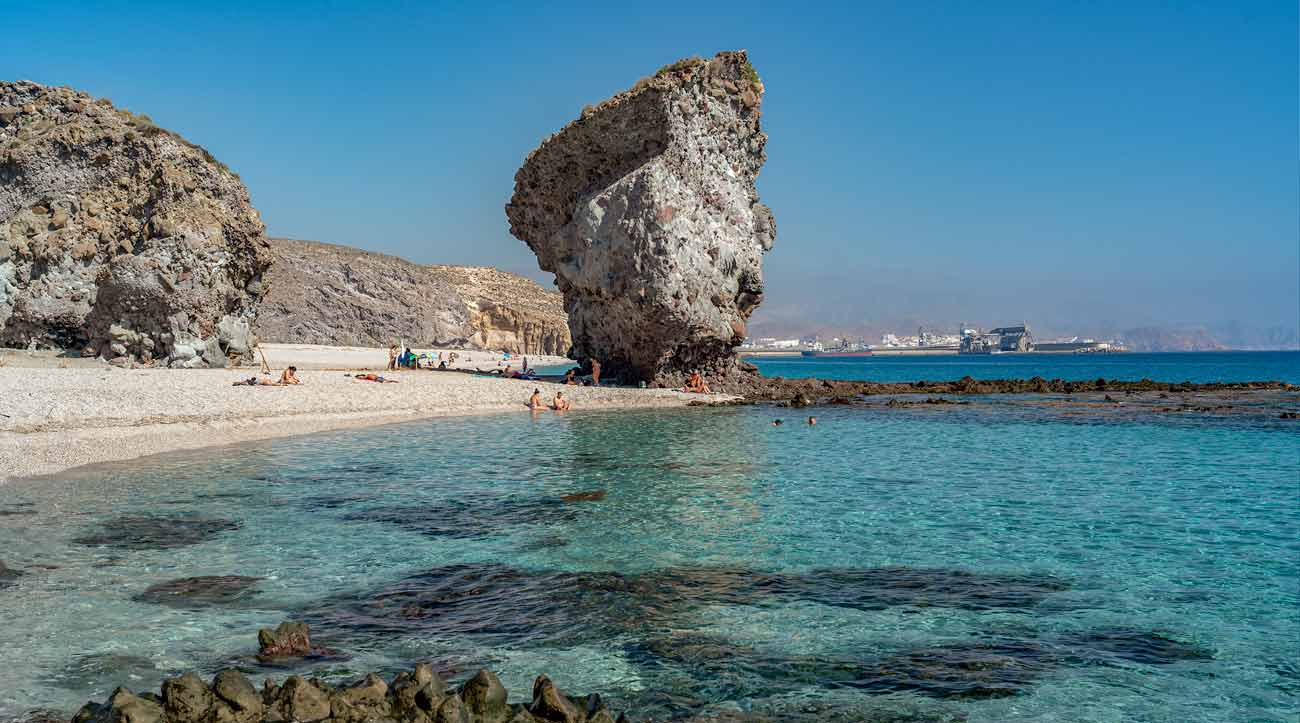
Days 4–7 — Cabo de Gata, unhurried
Goal: stop “doing the route” and start simply being
This is where the plan ends. Not because there’s nothing to see, but because you no longer need to chase anything. Cabo de Gata works best when you lower expectations and raise attention.
Coves reached on foot, coastal paths that don’t demand speed, small villages where time stretches, and sunsets that end the day without needing an agenda.
Each morning you decide the same thing: stay where you are or move a little further. And almost always, the simplest option wins. In this part of the trip, not doing too much is exactly right.
Key idea for these days
Cabo de Gata isn’t “covered”. It’s lived. And that only happens when you allow yourself to properly stop.
Practical tips (without ruining the experience)
How to do it properly in a camper (desert and natural park)
- 🅿️ Follow parking and overnight rules strictly, especially in Cabo de Gata Natural Park. Freedom isn’t improvisation.
- 💧 Keep water accessible at all times. In arid areas it’s not an extra: it’s basic kit.
- 🧭 Short, well-thought-out stretches. Here, tiredness comes more from sun and open space than from kilometres.
- 🌬️ Factor in the wind. In Cabo de Gata it can dictate where you stop and how you spend the night.
What to eat (to match the landscape)
- 🐟 Fresh fish and simple cooking on the coast: no disguise, just good ingredients.
- 🍅 Vegetables, olive oil and lighter midday plates: it makes the heat easier to live with.
- 🍲 Something warm as the sun drops: even in the desert, nights cool down.
- 🍞 Bread, fruit, water and time. On this route, that’s usually enough.
Final tip (from someone who understood it too late):
Don’t try to optimise this route. The desert and Cabo de Gata don’t work with rushing or checklists. They work when you slow down, look further, and stay a little longer than you planned.
FAQ (questions you’ll ask yourself anyway)
How many days do I need for this route?
Ideally, between 5 and 7 days. Five lets you cover the key points. Seven turns the trip from a route into a genuinely felt experience, especially in Cabo de Gata.
Is this a difficult route to do by camper?
It isn’t difficult, but it is very different. Fewer services, more open space and more sun. That’s precisely why a well-equipped camper makes the difference between travelling tense and travelling calm.
Can you stay overnight freely in the desert or in Cabo de Gata?
You need to be especially careful. In Cabo de Gata Natural Park the rules are strict and wild camping isn’t allowed. The key is to check properly, respect the rules and choose places where overnight parking is permitted.
Is it too hot to do this route?
In summer it can be demanding, especially in Tabernas. That’s why we recommend spring and autumn, when the light is still spectacular but temperatures let you enjoy the journey without burning out.
What kind of traveller enjoys this route most?
People who aren’t bothered by silence, who love open landscapes, and who understand not every trip is about collecting places. If you like to stop, look, and stay a bit longer, this route will suit you.
The vehicle matters more than you think
On a route like this, it’s not just about moving, but about where and how you end the day. Space, autonomy and comfort make the difference when the landscape is demanding and services are scarce.
Fully equipped for long routes, quiet nights and trips where the journey matters as much as the destination.